
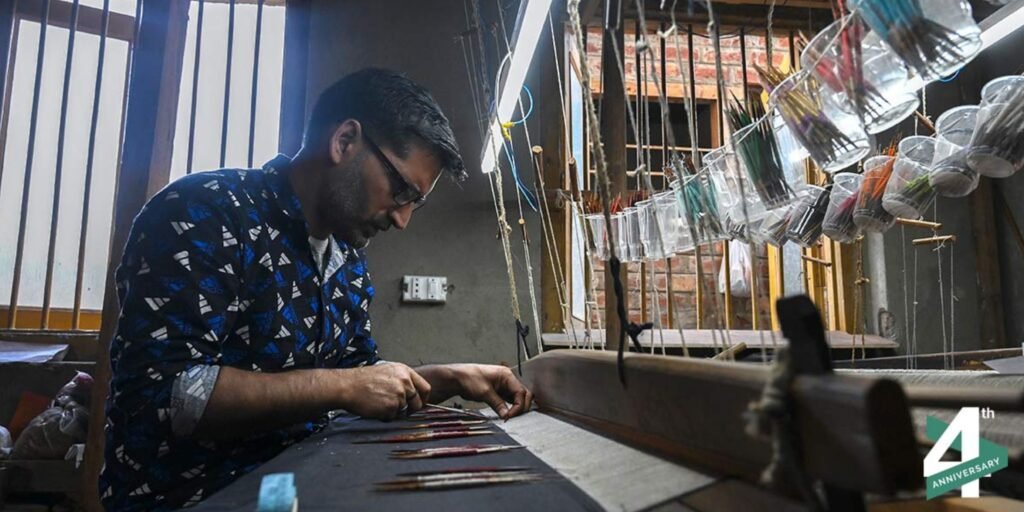


- Genuine innovation and flexible spinking techniques redefine modern textile artistry
- Understanding the Core Principles of Spinking
- The Role of Fiber Choice in Spinking
- Exploring Techniques Within Spinking
- Innovative Tooling in the Spinking Process
- Distinguishing Spinking from Established Techniques
- Spinking vs. Nuno Felting: A Closer Look
- Applications of Spinking in Contemporary Design
- Future Trajectories: Advancements and Emerging Trends
Genuine innovation and flexible spinking techniques redefine modern textile artistry
The world of textile creation is constantly evolving, driven by a desire for innovative techniques and unique aesthetic outcomes. Among the emerging methodologies gaining traction is spinking, a process that blends elements of spinning, linking, and intricate fiber manipulation. This approach is rapidly changing how designers and artisans approach material construction, leading to textures and forms previously unattainable through traditional methods. It represents a departure from conventional weaving and knitting, offering a greater degree of control over the final fabric structure and a pathway to truly bespoke textile designs.
Traditional textile production, while time-tested and reliable, often limits creative expression to established patterns and weaves. The limitations of looms and knitting machines can restrict the types of materials used and the complexity of designs that can be realized. Innovations like spinking seek to overcome these obstacles, fostering a new wave of artistic freedom where the boundaries of textile art are continuously challenged. This focus on experimentation and individuality is particularly appealing to contemporary designers seeking to differentiate their work in a crowded marketplace. The demand for textures and designs that are distinctly unique fuels the growth of these novel techniques.
Understanding the Core Principles of Spinking
At its heart, spinking is a dynamic process that doesn't adhere to rigid rules. It’s more accurately described as a family of techniques rather than a single, defined method. However, certain core principles underpin most spinking approaches. These involve a deliberate manipulation of fibers – whether they are natural, synthetic, or a blend of both – to create interconnected structures without relying solely on traditional interlocking mechanisms like those used in weaving or knitting. This is often accomplished using specialized hand tools, and sometimes with modified industrial machinery, allowing for a tactile and intuitive design process. The ability to directly shape the material, rather than relying on a pre-programmed equipment sequence, is one of spinking’s most significant advantages.
The Role of Fiber Choice in Spinking
The success of a spinking project is heavily dependent on the fibers used. Different materials possess unique properties that impact the final texture, drape, and durability of the resulting textile. Wool, with its natural crimp and elasticity, lends itself well to creating voluminous and textured spinking structures. Silk, known for its smooth and lustrous finish, allows for delicate and refined results. Synthetic fibers like nylon and polyester offer strength, resilience, and the ability to introduce vibrant colors. Experimentation with fiber blends is also commonplace, allowing artisans to combine the advantages of different materials. For instance, blending wool with silk can create a textile that is both soft and durable, while incorporating a small percentage of a synthetic fiber can add increased tensile strength.
| Fiber Type | Characteristics | Suitable Spinking Applications |
|---|---|---|
| Wool | Warm, elastic, textured | Bulky scarves, textured wall hangings, sculptural forms |
| Silk | Smooth, lustrous, delicate | Lightweight shawls, refined surface embellishments, art garments |
| Cotton | Breathable, absorbent, versatile | Interior textiles, casual wear applications, layered structures |
| Polyester | Durable, wrinkle-resistant, colorfast | Outdoor textiles, industrial applications, structured designs |
The choice in fiber also significantly affects the dyeing and finishing processes used in spinking. Some fibers, like wool, readily accept natural dyes, whereas others require synthetic alternatives. Understanding these intricacies is critical for achieving the desired aesthetic and functional properties in the final textile.
Exploring Techniques Within Spinking
Spinking isn’t a single technique; it's a design philosophy that encompasses a diverse range of methods. Some artisans utilize hand-held tools to individually manipulate fibers, building up layers and creating intricate patterns. Others adapt traditional spinning wheels or knitting machines to perform non-conventional operations. Still others explore entirely new tools and machinery in pursuit of unique effects. A common thread amongst these approaches lies in the emphasis on hand-craftsmanship and the direct engagement of the artist with the material. The variability inherent in these techniques is often celebrated, resulting in textiles that possess a hand-made quality and an organic aesthetic. This intentional irregularity differentiates spinking from the uniformity often associated with mass-produced fabrics.
Innovative Tooling in the Spinking Process
The development of specialized tools has been crucial in expanding the possibilities of spinking. Modified spinning wheels, for example, can be used to create continuous strands of interconnected fibers, which are then shaped and molded into three-dimensional forms. Custom-designed needles and hooks allow for intricate fiber manipulation and the creation of complex textures. Digital fabrication tools, such as laser cutters and 3D printers, are also increasingly being integrated into the spinking process, enabling the creation of precise molds and templates for fiber placement. The use of these advanced technologies allows artisans to push the boundaries of what's possible with spinking and to create truly innovative textile designs. This blending of traditional hand-craftsmanship with modern technology is a hallmark of the spinking movement.
- Fiber Bonding Methods: Utilizing heat, adhesives, or entanglement to secure fibers.
- Layered Construction: Building up successive layers of fibers to create depth and texture.
- Needle Felting Integration: Incorporating needle felting to further consolidate and shape the spunked material.
- Form Creation: Using molds and armatures to create three-dimensional forms with spunked fibers.
- Surface Embellishment: Adding decorative elements, such as beads or embroidery, to enhance the visual appeal.
The ongoing innovation in tooling and techniques suggests that the full potential of spinking is still largely unexplored. As more artisans and designers experiment with this versatile process, we can anticipate even more groundbreaking developments in the years to come.
Distinguishing Spinking from Established Techniques
While spinking shares similarities with traditional textile methods like knitting, weaving, and felting, it possesses distinct characteristics that set it apart. Knitting and weaving rely on the systematic interlacing of yarns to create fabric, while spinking prioritizes the direct manipulation and interconnection of fibers. Felting involves the matting together of fibers, typically through the use of moisture, heat, and agitation, whereas spinking emphasizes control over the individual fiber placement and structure. Spinking provides a greater degree of freedom in terms of form and texture, allowing for the creation of textiles that are not easily achievable through conventional means. The resulting materials possess a unique character, often characterized by their organic shapes and tactile qualities.
Spinking vs. Nuno Felting: A Closer Look
Nuno felting, a hybrid technique combining wet felting and lightweight fabrics, is often mentioned in discussions about innovative textile manipulation. While both nuno felting and spinking involve the layering and bonding of fibers, they differ significantly in their approach. Nuno felting aims to integrate fabric into a felted structure, while spinking focuses on building up a textile from individual fibers without necessarily incorporating a pre-existing fabric base. Spinking often results in a more three-dimensional and sculptural outcome, whereas nuno felting typically produces a relatively flat and planar textile. Both techniques, however, showcase the creative possibilities of pushing the boundaries of traditional fiber arts. The artistic choice between the two depends greatly on the desired aesthetic and functional properties of the final piece.
- Identify fiber properties suitable for the project.
- Select appropriate tooling for manipulation.
- Experiment with layering and interconnectedness.
- Refine fiber bonding techniques.
- Explore surface embellishment options.
Ultimately, the distinction lies in the emphasis on fiber manipulation versus fabric integration, with spinking championing the former.
Applications of Spinking in Contemporary Design
The versatility of spinking has led to its adoption across a wide range of design disciplines. In fashion, spinking is being used to create innovative garments and accessories with unique textures and silhouettes. Designers are exploring the possibilities of constructing entire garments from spunked materials, resulting in pieces that are both visually striking and remarkably comfortable. In interior design, spinking is employed to create sculptural wall hangings, textured upholstery, and unique lighting fixtures. The ability to tailor the material’s properties to specific applications makes spinking an ideal choice for creating custom design elements. Furthermore, the technique is gaining prominence in the field of fine art, providing artists with a new medium for expressing their creativity and exploring abstract forms.
The growing interest in sustainable and ethical fashion is also driving the adoption of spinking. By utilizing reclaimed and recycled fibers, artisans can create beautiful and environmentally responsible textiles. The handmade nature of spinking aligns with the values of slow fashion, promoting craftsmanship and minimizing waste. As consumers become increasingly aware of the environmental impact of their purchasing decisions, the demand for sustainable textile alternatives is expected to continue to rise, further fueling the growth of spinking.
Future Trajectories: Advancements and Emerging Trends
The evolution of spinking is far from complete. Current research is exploring the integration of bio-based materials, such as algae and mycelium, into spunked structures, potentially leading to biodegradable and compostable textiles. Innovations in digital design and fabrication are also expected to play a significant role in the future of spinking. Automated spinking machines, guided by computer-aided design (CAD) software, could enable the mass production of complex spunked textiles while maintaining a level of customization and design flexibility. This combination of technology and artistry holds the potential to revolutionize the textile industry, offering a sustainable and innovative alternative to traditional manufacturing processes.
Moreover, the growing community of spinking practitioners is fostering a collaborative environment where knowledge and techniques are freely shared. Online workshops, artist residencies, and international exhibitions are providing opportunities for artisans to learn from each other and to push the boundaries of this exciting new medium. The future of spinking looks bright, with a continuous stream of experimentation and innovation promising to redefine our understanding of what textiles can be.